To further my knowledge and understanding of the history of Typography and Illustration in Album covers of the 60’s and 70’s Psychedelic era and how the social and cultural situation of that time inspired the creation of these album covers
Throughout the writing of this essay, I intend to answer this question to further my understanding of how outside influences can influence typography and illustration, and in what way music can change art and I would like to increase my understanding of the past of typography that was seen by many and which created many cultural and social groups.
I will search through album cover books and art books of the 60’s and 70’s, I’ve found not only the art on album covers has the influence of psychedelia.
I have chosen to pursue typography as my pathway, and this subject around album covers seemed apt as one of the areas I haven’t covered in design is advertising in the music world, music has a lot of different aspects towards it, including cultural ties whether it be music from different countries or simply different genres, each type of music has its own individual feel, even within countries. The increase of psychedelic music within the 60s and 70s reflected the cultural and social ties of the time, the whole “hippy” attitude and “free love” the sex drugs and rock and roll idea was born.
The use of psychedelic drugs definitely had an effect on the music in the 60s and 70s therefore majorly having an influence in the album cover art of that time, the artists designing this art would use lots of vibrant colours as if under the effect of such psychedelic drugs as “Magic Mushrooms” or LSD .
This subject connects well to my chosen pathway, I intend to work as an illustrator or typographer, and the subject of psychedelia in art and in music, I feel this is a really interesting field to study and analyze. Music is a very moving thing, it can control ones emotion and moods, therefore the feeling of ecstasy when “high” on various drugs could be a tricky one to attempt to convey as an image, looking at various pieces of art that are classed as psychedelic it is very hard to understand the feelings the artist is trying to portray, most pieces being overly colourful with swirling patterns.
I have contacted such artists like Jann Haworth and Peter Blake, but have had no reply, I asked them the following questions: “What inspired your work on this album cover, and when you were asked to create this album cover did your employer give you any sort of indication of what they were looking for.
The impact of psychedelic drugs on western culture in the 1960s led to semantic drift in the use of the word "psychedelic", and it is now frequently used to describe anything with abstract decoration of multiple bright colours, similar to those seen in drug-induced hallucinations.
The era for psychedelic drugs gave its name to the style of psychedelia, a word describing a category of rock music known as psychedelic rock (such as The Byrds, Jimi Hendrix, Pink Floyd and Cream), as well as visual art, fashion, and culture that is associated originally with the high 1960s “hippies"
During the 1960’s a definite Drug Culture emerged. Hippies smoked marijuana the 60’s started the widest scale public scene of drug use at Woodstock. In America the youth of the 60’s used drugs for a variety of reasons including the start of the Vietnam War wanting to rebel against the government (which is where the whole free love ethic was dreamt up) activist movements, and the general pleasure-oriented society.
The two main drugs taken at this time were Marijuana and LSD (or Acid). Marijuana became popular at this time. The other drug of this era, LSD is a hallucinogen, When taken, LSD, can cause visual hallucinations, altered sense of self and surroundings, euphoria, and a sense that one might be uncovering secrets.

(2011). Drop Acid not Bombs. Available: http://www.dropacid.com/img/drop-acid-not-bombs.jpg. Last accessed 23rd March 2012.
(2011). Purple Haze. Available: http://www.rockband.com/assets/thumbs/purplehaze.png. Last accessed 20 March 2012.
(2011). Solar Navigator. Available: http://www.solarnavigator.net/music/music_images/Jimi_Hendrix_Axis_album_cover.jpg. Last accessed 20 March 2012.

Almost all of the bands I have researched into for this essay sang about the use of drugs and even promoted the use of drugs, for example the following lyrics and album covers establish a link between words and artwork creating an emotion through music and showing the way the band were feeling when these songs were written.
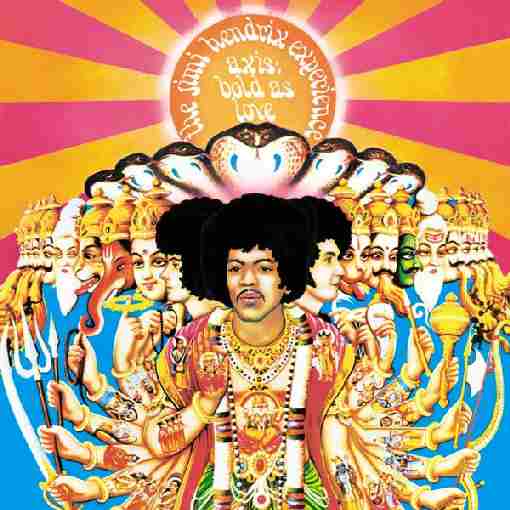
Purple haze all in my brain
Lately things just don't seem the same
Actin' funny, but I don't know why
'Scuse me while I kiss the sky
Purple haze all around
Don't know if I'm comin' up or down
Am I happy or in misery?
Whatever it is, that girl put a spell on me
just this first verse explains a lot, for those who don’t know “Purple Haze” is a strain of marijuana and the song is written about the effects it has on one’s self when under the effect of the drug, the album cover was also created to give a sort of “trippy” feel too it as if under the effect of psychedelic drugs, the description of these types of drugs is stated as; “mind-expanding drugs that are able to induce states of altered perception and thought, frequently with heightened awareness of sensory input but with diminished control over what is being experienced” and “more information rushes in. You sense more, think more and feel more. You become aware of things normally filtered out by your mind -- visual, auditory, sensory and emotional. The intricate details on surfaces, the richness of sound, the brightness of colours, and the complexity of your own mental processes are all brought to the foreground of your consciousness.” This is why most of the album covers of the time were very colourful and bright.
Lately things just don't seem the same
Actin' funny, but I don't know why
'Scuse me while I kiss the sky
Purple haze all around
Don't know if I'm comin' up or down
Am I happy or in misery?
Whatever it is, that girl put a spell on me
just this first verse explains a lot, for those who don’t know “Purple Haze” is a strain of marijuana and the song is written about the effects it has on one’s self when under the effect of the drug, the album cover was also created to give a sort of “trippy” feel too it as if under the effect of psychedelic drugs, the description of these types of drugs is stated as; “mind-expanding drugs that are able to induce states of altered perception and thought, frequently with heightened awareness of sensory input but with diminished control over what is being experienced” and “more information rushes in. You sense more, think more and feel more. You become aware of things normally filtered out by your mind -- visual, auditory, sensory and emotional. The intricate details on surfaces, the richness of sound, the brightness of colours, and the complexity of your own mental processes are all brought to the foreground of your consciousness.” This is why most of the album covers of the time were very colourful and bright.

Hendrix was a little disappointed with the album's cover art. Although he appreciated the symbolic design, he mentioned in an interview that it would have been more appropriate if the cover art showcased his Native American "Indian" heritage. The British Track records art department had independently chosen to use the current fad for all things Indian to create the cover, and thus the album's cover has a photographed copy of a mass-produced religious poster of the Hindu devotional painting known as Viraat Purushan-Vishnuroopam with a small, superimposed painting of the group by Roger Law (from a photo portrait by Karl Ferris) blended in.
Another song of the sort relating to the other drug of the time, LSD, would be Lucy in the Sky with Diamonds by The Beatles was a very controversial song at the time, the title itself being an alternative abbreviation for LSD the Beatles denied this accusation though and stated “Lennon's son, Julian, inspired the song with a nursery school drawing he called, Lucy in the sky with diamonds". Shortly after the song's release, speculation arose that the first letter of each of the title's nouns intentionally spelled LSD. Although Lennon denied this, the BBC banned the song.
Evans, R (2010). The Art of the Album cover. 3rd ed. China: Compendium Publishing. p58-59. – The idea for the cover of Sgt. Pepper’s initially came from Paul McCartney. He envisioned a shot of The Beatles in an Edwardian sitting room surrounded by photographs of their heroes. One of his sketches showed the band in military uniforms, sporting moustaches and carrying brass instruments, others included a floral clock with friends and dignitaries.
The outcome was this continuing with the original idea of being surrounded by photographs of their heroes, instead the designers (Peter Blake and Jann Haworth) combined all of the ideas and created almost a family styled photograph.
Another very interesting piece is the album cover for Creams album Disraeli Gears this album was described as “a new type of pop-psychedelic sensation” (Kelly, E. (-). The 60's: An Unforgetable Era. Available: http://students.cis.uab.edu/kellyew/finalproject3.html. Last accessed 17th March 2012). The psychedelic cover art was created by Australian artist Martin Sharp, who lived in the same building as Clapton at the time of the Chelsea artists colony The Pheasantry. Sharp would go on to create the artwork to Cream's next album Wheels of Fire and co-wrote the songs "Tales of Brave Ulysses" and the Savage Seven Theme "Anyone for Tennis" with Eric Clapton. The back-cover photography was taken by Bob Whitaker who did the photography for several works by The Beatles including the controversial Yesterday and Today. The cover art was also used for the compilation album Those Were the Days.
The artist Roger Dean is a major influence of work during the 60s and 70s, he first began designing album covers for a band called “The Gun” in 1968 and later moved on to design covers for bands in the progressive rock department such as Yes and Asia, the fascinating thing about his style of work is the fact that it all looks digitally created when in fact he used materials like including gouache, ink, enamel, crayon and collage In addition to painting.

(2009). Freyjas Castle. Available: http://www.teacherweb.com/LA/JHMS/JBUSH/FreyjasCastle1024x768.jpg. Last accessed 18th March 2012.
Many artists in the late 1960s and early 1970s attempted to illustrate the psychedelic experience. One example of this experimentation is seen in Mati Klarwein's painting Annunciation, which was used as the cover art for Santana's Abraxas. The cover of Pink Floyd's 1968 album A Saucerful of Secrets is also of this type. The cover of Oasis' 2008 album, Dig Out Your Soul, also has a psychedelic album cover, with a slightly muted colour scheme.


Through my research I have come to the realisation that this era of Psychedelia is now dead, there are very a very small amount of bands that do this sort of music nowadays, and hardly any people who listen to this amazing genre of music. The main problem with that is the consumer doesn’t seem bothered with collecting albums anymore, it’s all about how much music you can put on a music player and no longer about what the music actually is about, the album covers back in the 60s and up to the late 80s were all more or less like a story, the songs on the albums would all relate somehow to the artwork either on the cover, on the inside or on any extra inserts that used to be included in album sleeves. The music would cause you to feel something, and really would make you feel something, nothing like the current drivel knocking about on radio stations, where most of the “music” has been digitally created and therefore it sucks out the passion and for me music should always be about passion and that usually reflects on the album artwork. If a band creates an album with a sad theme one would expect that kind of feel to the art work there wouldn’t be bright colours plastered all over it, however in this day and age there is all sorts on the front of albums it seems you have to be an attractive woman, strip down and photograph yourself and somehow that sells albums.
I used a range of sources including various internet sites and books sourced from Wigan and Leigh’s library, Wigan library, Salford library and books purchased by me, including:
1000 Record Covers by Michael Ochs (741.66 och) Taschen GmbH; 25th edition (29 April 2005)
Music Graphics by Stolze Design (741.66 one)
The Greatest Album Covers Of All Time by Barry Miles, Grant Scott and Johnny Morgan (741.66 mil) Collins & Brown; Re-issue edition (3 Nov 2008)
Album Classic Sleeve Design by Nick de Ville Mitchell Beazley Octopus Publishing Group LTD (2003)
Stolze Design (2008). Music Graphics. 2nd ed. Massachusetts: Rockport Publishers.
Most images have been scanned in from the books stated above.


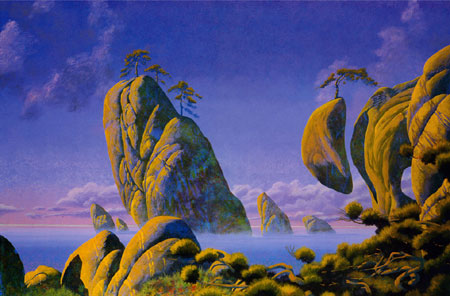

Roger Dean (born 31 August 1944) is an English artist, designer, architect, and publisher. He is best known for his work on posters and album covers for musicians, which he began painting in the late 1960s. The covers often feature exotic, fantasy landscapes. His work has sold more than sixty million copies world-wide, and his fantasy landscapes seem to have inspired those used in the film Avatar. =
His first album cover work was in 1968 for The Gun. He also did the artwork for Atomic Rooster's album In Hearing of... This album cover hinted at the inimitable style for which he would later become famous. In the same year Dean produced the cover for the first album by the African/Caribbean band Osibisa, which featured a hybrid insect/elephant. This was much closer to Dean's work as we came to know it and it attracted widespread attention. Later that year, he began the partnership with the progressive rock bands Yes (and Asia) for which he is best known. His first design for the band was for their album Fragile. Dean designed the now-classic Yes "bubble" logo, which first appeared on the album Close to the Edge, and continued to create covers for the band until as recently as 2011 (Fly From Here). Yes guitarist Steve Howe said, "There is a pretty tight bond between our sound and Roger's art." In addition to their album covers, Dean also contributed to his brother Martyn Dean's stage set designs for the band.
Known primarily for the dreamy, other-worldly scenes he has created for Yes, Budgie, Uriah Heep, Gentle Giant and other bands, Dean has said, "I don't really think of myself as a fantasy artist but as a landscape painter." Characteristic landscapes show graceful stone arches (as shown in Arches Mist, below) or floating islands, while many paintings show organic appearing habitats (such as shown in the cover for Anderson Bruford Wakeman Howe). Though he primarily works with watercolour paints, many of his paintings make use of multiple media, including gouache, ink, enamel, crayon and collage. In addition to his cover paintings, Dean is respected for his calligraphic work, designing logos and titles to go with his paintings.
Lysergic acid diethylamide, abbreviated LSD or LSD-25, also known as lysergide and colloquially as acid, is a semisynthetic psychedelic drugof the ergoline family, well known for its psychological effects which can include altered thinking processes, closed and open eye visuals,synaesthesia, an altered sense of time and spiritual experiences, as well as for its key role in 1960s counterculture. It is used mainly as anentheogen, recreational drug, and as an agent in psychedelic therapy. LSD is non-addictive, is not known to cause brain damage, and has extremely low toxicity relative to dose, although in rare cases adverse psychiatric reactions such as anxiety or delusions are possible.
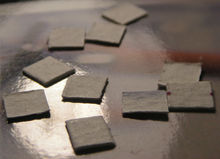
LSD was first synthesized by Albert Hofmann in 1938 from ergotamine, a chemical derived by Arthur Stoll from ergot, a grain fungus that typically grows on rye. The short form "LSD" comes from its early code name LSD-25, which is an abbreviation for the German "Lysergsäure-diethylamid" followed by a sequential number. LSD is sensitive to oxygen, ultraviolet light, and chlorine, especially in solution, though its potency may last for years if it is stored away from light and moisture at low temperature. In pure form it is a colorless, odorless, and mildly bitter solid. LSD is typically delivered orally, usually on a substrate such as absorbent blotter paper, a sugar cube, or gelatin. In its liquid form, it can also be administered by intramuscular or intravenous injection. LSD is very potent, with 20–30 µg (micrograms) being the threshold dose. New experiments with LSD have started in 2009 for the first time in 40 years.
The effects begin to be felt between 20 minutes to two hours after ingestion. The first signs are a sense of euphoria and expectation, along with a tingling body feeling. Once started, the effects usually take between 30-45 minutes to reach their peak. It is common to feel some nausea during this stage. It can be reduced by having an empty stomach. During this time, your pupils dilate and your body temperature rises. At the same time, your heart rate and blood pressure go up. Sweating is not uncommon, and your mouth may feel dry. You may also experience tremors as part of your experience.
Using acid can also affect your emotions. It's possible to feel a number of different feelings at once, or you may experience rapid mood swings.

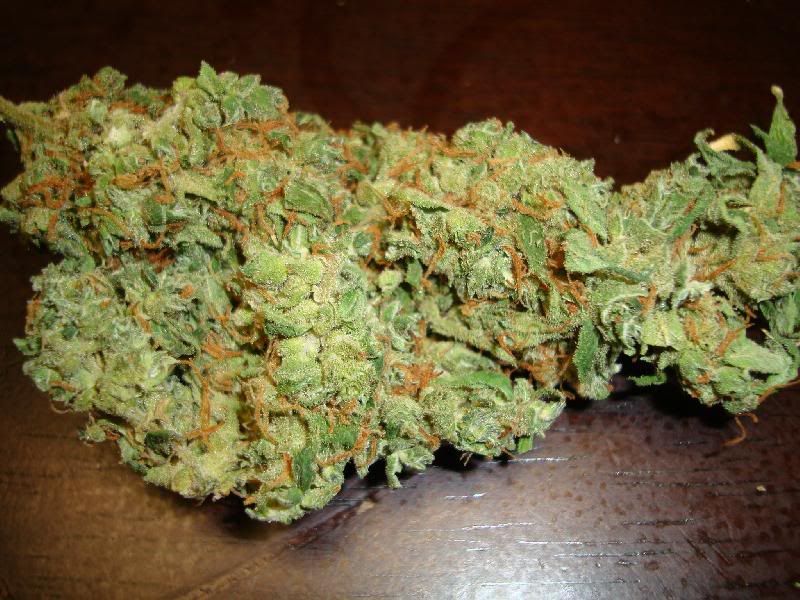
Contemporary uses of cannabis are as a recreational drug, as religious or spiritual rites, or as medicine; the earliest recorded uses date from the 3rd millennium BC. In 2004, the United Nations estimated that global consumption of cannabis indicated that approximately 4.0 percent of the adult world population (162 million people) used cannabis annually, and that approximately 0.6 percent (22.5 million) of people used cannabis daily.[7] Since the early 20th century cannabis has been subject to legal restrictions with the possession, use, and sale of cannabis preparations containing psychoactive cannabinoids currently illegal in most countries of the world; the United Nations has said that cannabis is the most used illicit drug in the world.


When anyone thinks of the Sixties, the 'hippies' of that time definately come to mind. This is probably the most famous counter-culture to this day. During the 1960's this radical group shocked America with their alternative lifestyle and radical beliefs. The 'hippies' or 'freaks' as they were called in the Sixties was a group of rebellious young adults, mostly under the age of 25, who completely went against all of the morals and values that their parents and society imposed upon them. They were anti-war and pro-peace. Alot of them emerging has to do with the war the United States was fighting in Vietnam at the time and the 'emptiness' they felt about the middle-class way of life. Many of them did not like the ''keeping up with the Jones's'' mentality.
They wanted less work, less money, more organic foods, and more freedom. Some people said they were spoiled and wasting their lives away, but to the Hippies themselves this was a way of life and no one was going to get in the way of their dreams and ambitions. They were not worried about the moral values that had been imposed to them, such as saving virginity til marriage, which inevitably led to the sexual revolution that happened during the Sixties. They were also involved with expiramentation of many drugs including mushrooms, LSD, marijuana, and then shortly afterward amphetamines. Hippies came from all over but were prodominately from wealthy middle-class families.
A majority of them came to settle in a part of San Francisco which is now commonly known as the Haight-Ashbury District. Even the Grateful Dead, Jefferson Ariplane, and Janis Joplin made their home in San Francisco near the corner of Haight and Ashbury. Most of the 'hippies' stayed there for a while, living either on the streets or in abandonded buildings. Some had apartments or houses, but most just drifted around. After a while their drug use turned from LSD and marijuana to 'speed'. Around 1970 most of the hippies moved back home and the ones that stayed in the Haight-Ashbury District eventually got jobs and settled into houses, but no matter where they moved to or from, where they work now, and even lead normal lives, the hippie culture changed and continues to change the way people view the world.
Psilocybin mushrooms are fungi that contain the psychoactive compounds psilocybin and psilocin. There are multiple colloquial terms for psilocybin mushrooms, the most common being shrooms and magic mushrooms.[1] Biological genera containing psilocybin mushrooms include Agrocybe, Conocybe, Copelandia, Galerina,Gerronema, Gymnopilus, Hypholoma, Inocybe, Mycena, Panaeolus, Pluteus, and Psilocybe. There are approximately 190 species of psilocybin mushrooms and most of them fall in the genus Psilocybe.
Psilocybin mushrooms were used in ancient times, and were depicted in rock paintings. Many native peoples have used mushrooms for religious purposes, rituals and healing. In modern day society they are often used to evoke a "high", which is sometimes described as spiritual experience and is often euphoric in nature. Sometimes however, the disorientation of psilocybin and psilocin's psychedelic effects may bring on anxiety such as panic attacks, depression and paranoid delusion However, recent studies done at the Imperial College of London and also at John Hopkins School of Medicine conclude that when used properly, Psilocybin acts as an anti-depressant as proven by fMRI brain scans.


